

What Does ‘Christ the Firstfruits’ Mean? Why the Resurrection Guarantees Our Hope

By Matthew Arney on July 4, 2026 in 1 Corinthians, Biblical Teachings on Life Topics, Christian Living & Spiritual Growth, Theology & Doctrine


In this passage, Paul shows us that Christ’s resurrection is a settled, saving, and sovereign fact—a truth that shapes everything about our future. This article explores Paul’s argument and shows why Jesus’ resurrection guarantees the resurrection of all who belong to Him. The resurrection of Jesus Christ is not a side doctrine, an optional belief, or a theological footnote. According to the apostle Paul, it is the foundation of our hope for eternity. In 1 Corinthians 15:20–28, Paul declares with absolute certainty: “Now is Christ risen from the dead, and become the firstfruits of them that slept.” (1 Corinthians 15:20)


1. Christ’s Resurrection Is a Settled, Non‑Debatable Fact

Paul does not treat the resurrection as a topic Christians may “agree to disagree” about. He treats it as the non‑negotiable center of the gospel.

A. A Historical Certainty

Paul roots the resurrection in eyewitness testimony (1 Corinthians 15:5–8). The risen Christ appeared to many—disciples, apostles, and over five hundred believers at once.

B. A Theological Necessity

If Christ is not risen, Paul says our preaching is empty, our faith is useless, and we are still in our sins (1 Corinthians 15:14–17). But Christ is risen—and His resurrection is the guarantee of ours.

C. The Firstfruits of a Coming Harvest

Paul uses Old Testament imagery from the festival of firstfruits (Leviticus 23:12–19). The first sheaf of grain was offered to God as a pledge that more harvest was coming. Christ is that first sheaf: His resurrection is the pledge that all who belong to Him will rise. The apostle writes elsewhere that our bodies will be changed: Philippians 3:21 says He will “change our vile body, that it may be fashioned like unto his glorious body.”


2. Adam Brought Death — Christ Brings Resurrection

Paul continues: “For since by man came death, by man came also the resurrection of the dead.” (1 Corinthians 15:21)

A. Adam as Federal Head

Adam’s sin brought death to the entire human race (Genesis 2:17; Romans 5:12). Every person born into this world is “in Adam,” and therefore under the sentence of death.

B. Christ as the Second Man

Christ—fully God and fully Man—entered death, conquered it, and emerged victorious. He is the Second Man and the Last Adam (1 Corinthians 15:45–47). Through Him comes resurrection:

  • The resurrection of the righteous (Luke 14:14; Revelation 20:6)
  • The resurrection of the wicked (John 5:28–29; Acts 24:15; Revelation 20:5)

Scripture teaches two resurrections, not one general resurrection.

C. “In Adam” vs. “In Christ”

Paul writes: “As in Adam all die, even so in Christ shall all be made alive.” (1 Corinthians 15:22)

“In Adam” describes all humanity by natural birth. “In Christ” describes all believers by new birth (John 3:3; 2 Corinthians 5:17). We are in Adam by nature; we are in Christ by grace.


3. The Order of Resurrection: Christ, Then His People

Paul uses a military term when he says: “Every man in his own order.” (1 Corinthians 15:23) This means “every man in his own cohort.”

A. Christ the Firstfruits

Christ rose first—never to die again. He is the firstfruits of them that slept (1 Corinthians 15:20).

B. Those Who Are Christ’s at His Coming

When Christ returns, He will call His people from the grave:

“For the Lord himself shall descend from heaven with a shout, with the voice of the archangel,
and with the trump of God: and the dead in Christ shall rise first: then we which are alive and remain
shall be caught up together with them in the clouds, to meet the Lord in the air: and so shall we ever
be with the Lord.” (1 Thessalonians 4:16–17)

This is the resurrection of the righteous—the “resurrection of life” (John 5:29).

C. The Parade of the Resurrection

The resurrection unfolds like a parade:

  • Christ rises as the firstfruits.
  • The Church begins at Pentecost (Acts 2).
  • Christ returns for His own.
  • The righteous rise to meet Him in the air (1 Thessalonians 4:16–17).
  • The wicked rise later for judgment (Revelation 20:11–15).

4. Then Comes the End: Christ’s Mediatorial Reign

Paul writes: “Then the end, when he shall have delivered up the kingdom to God, even the Father; when he shall have put down all rule and all authority and power.” (1 Corinthians 15:24)

A. Christ Must Reign

Christ reigns now at the Father’s right hand (Psalm 110:1; Ephesians 1:20–22), and He will continue reigning until every enemy is subdued and the earth is filled with the knowledge of the Lord (Habakkuk 2:14).

B. The Millennial Kingdom

Revelation 20 describes a thousand‑year reign of Christ:

  • Satan bound (Revelation 20:1–3)
  • Saints reigning with Christ (Revelation 20:4–6)
  • The earth filled with the knowledge of the glory of the Lord (Habakkuk 2:14; Isaiah 11:9)

C. The Final Judgment

After the millennium:

  • Satan is released briefly (Revelation 20:7–10)
  • The wicked dead are raised (Revelation 20:5)
  • The Great White Throne judgment occurs (Revelation 20:11–15)

D. Christ Delivers the Kingdom to the Father

When all enemies are defeated—including death, the last enemy (1 Corinthians 15:26)—Christ hands the kingdom back to the Father. Not because He ceases to be God, but because His mediatorial mission is complete. Then: “That God may be all in all.” (1 Corinthians 15:28)


5. Christ the Eternal Servant‑King

The Old Testament bond-servant law (Exodus 21:5–6) pictures Christ’s eternal love.

A servant who loved his master and family could choose to remain a servant forever, bearing a pierced ear as a sign of voluntary submission.

Christ is the greater Servant. He loved His Father, His Bride the Church (Ephesians 5:25), and His children. He chose not to “go out free.” He bears the marks of love forever (John 20:27).

In glory we will see those wounds and say, “There we have the evidence of His unchanging love.”


Conclusion: Hallelujah, What a Savior

The resurrection of Jesus Christ is the guarantee of our resurrection, the foundation of our hope, and the beginning of God’s final victory. When Christ returns, the righteous will rise, the wicked will be judged, death will be destroyed, and God will be all in all.

Until that day, we live as people of the firstfruits—people who know the grave is not the end, death is not the victor, and history is not wandering. The risen Christ is leading the procession, and the day is coming when we will sing forever: Hallelujah! What a Savior!


Practical Application: Living in the Power of the Resurrection

The resurrection of Christ is not only a future promise—it is a present power. Because Jesus lives, we can face every day with hope and courage.

  • Live with confidence. The same power that raised Jesus from the dead now works in you (Ephesians 1:19–20). Let that truth steady your heart when life feels uncertain.
  • Walk in newness of life. Resurrection life means leaving behind the old ways of sin and walking in the freedom Christ provides (Romans 6:4).
  • Serve with joy. Knowing that death is defeated gives purpose to every act of love, every word of encouragement, and every moment of service (1 Corinthians 15:58).

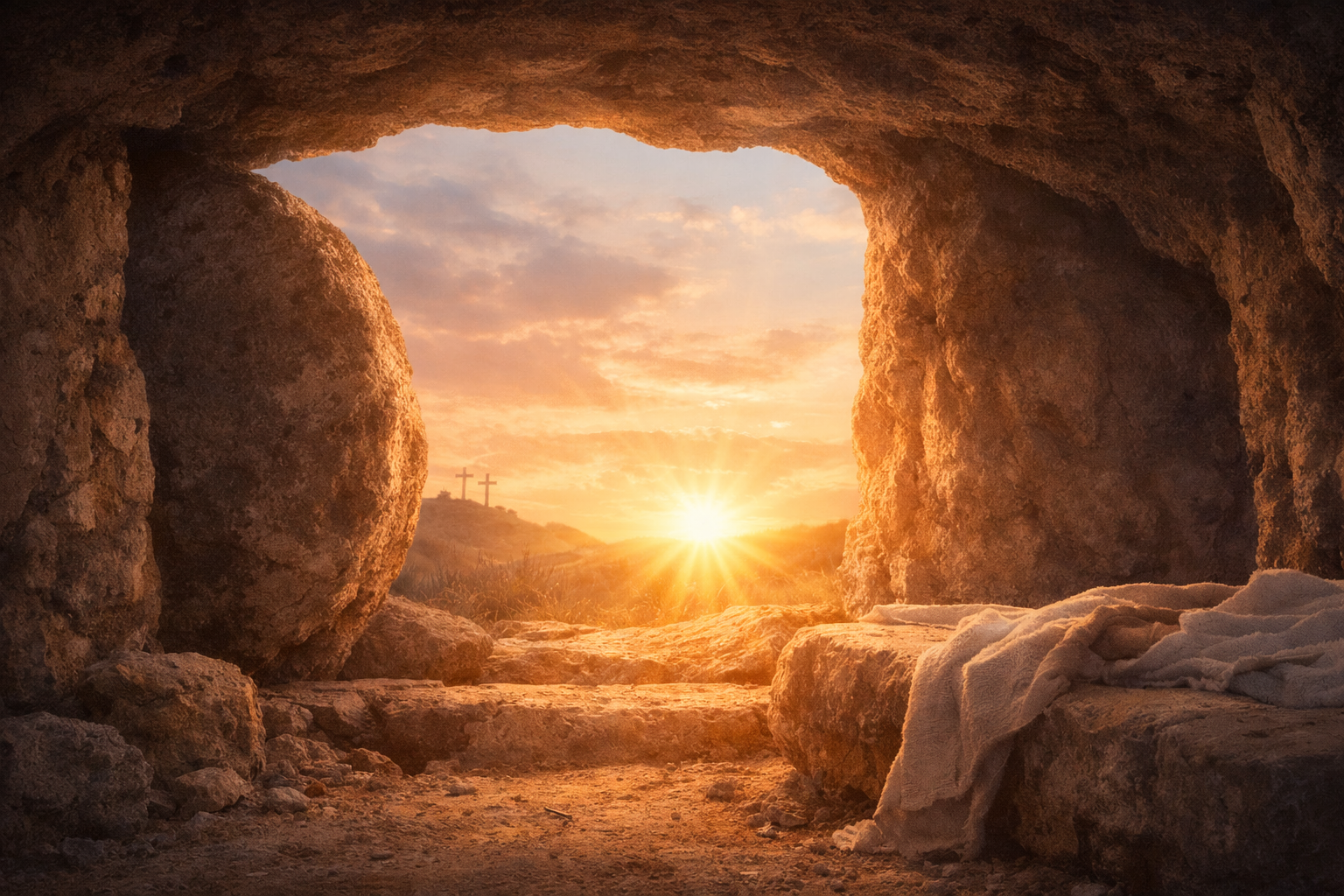
The empty tomb reminds us that our faith is not in a memory but in a living Savior. Let His victory shape your outlook, your priorities, and your daily walk.


Related Messages from CENTRAL BAPTIST


Respond to the Risen Christ

If this message has stirred your heart, don’t leave it as information. The same risen Lord who conquered death calls you to trust Him, follow Him, and rest your hope in Him alone.


Join Us This Sunday at Central Baptist Church Rockville

Want to talk with someone about salvation, baptism, or church membership? Contact us today—we would be honored to pray with you and walk with you.

Why Is the Resurrection of Jesus So Important?

By Matthew Arney on June 30, 2026 in Christian Living & Spiritual Growth

The Power and Necessity of the Resurrection

Introduction

The resurrection of Jesus is not simply one part of the Christian message — it is the very center of the gospel itself. In 1 Corinthians 15, Paul explains the importance of the resurrection by showing that without it, our faith collapses. If Christ is not risen, then preaching is empty, faith is meaningless, sin remains unforgiven, and death has the final word. But because Jesus truly rose from the dead, everything changes.

Paul reminds the church of the gospel he preached: Christ died for our sins, He was buried, and He rose again the third day according to the Scriptures. The resurrection is the divine confirmation that Jesus is who He claimed to be, that His sacrifice was accepted, and that eternal life is offered to all who believe. The empty tomb is not just a historical detail — it is the foundation of Christian hope.

The resurrection is not an optional doctrine or a theological footnote. It is the very heartbeat of Christianity.

Yet Corinth was surrounded by philosophies that denied any real resurrection. The Stoics believed the soul dissolved into a nebulous deity. The Epicureans insisted that death was final and life should be lived for the moment. Others embraced reincarnation, imagining endless cycles without true redemption. All of these stood in direct contradiction to the gospel Paul preached.

So Paul begins a series of “if” statements — each one exposing the devastating consequences of denying the resurrection.


If Christ Be Not Risen…

Paul’s logic is simple and devastating:

Our preaching is vain.

If Christ is not risen, then every sermon, every gospel tract, every outreach, every testimony is pointless. We would be proclaiming a powerless message to a hopeless world.

Your faith is vain.

Without the resurrection, faith has no anchor and no promise. There is no eternal life, no victory over sin, no hope beyond the grave.

We are false witnesses of God.

To preach a risen Christ when He is not risen would make us liars — not merely mistaken, but false witnesses about the character and work of God Himself.

You are yet in your sins.

Without the resurrection, there is no justification. Christ’s death would be nothing more than a tragic ending rather than a triumphant victory. We would stand before God still clothed in our sin, without the righteousness of Christ.

Those who have died in Christ have perished.

Every believing loved one who has gone before us would have no hope beyond the grave. Their faith would have been empty, their confidence misplaced.

We are of all men most miserable.

If our hope in Christ is only for this life, then the Christian life becomes nothing more than moral busywork. Without the resurrection, the Epicureans would be right — live for today, because there is nothing more.

Paul’s words are blunt, but they are necessary. A Christ who did not rise cannot save. A gospel without resurrection cannot redeem. A faith without resurrection cannot endure.


But Christ Is Risen

Praise God, Paul does not leave us in the “if.” He brings us to the glorious truth: Christ is risen, and because He is risen, everything changes.

  • Our preaching is profitable.
  • Our faith is secure.
  • Our witness is true.
  • Our sins are forgiven.
  • Our loved ones in Christ are with the Lord.
  • Our hope is eternal.

The resurrection is the power of the gospel. It is the guarantee of our future, the foundation of our faith, and the reason we proclaim Christ to a lost world. As Paul reminds us, we do not save anyone — but we faithfully give the gospel, trusting God to work through His Word.

And because Christ is risen, we live with confidence. We face trials with hope. We grieve with assurance. We witness with boldness. We labor with purpose. We look beyond this world knowing that the best is yet to come.


A Living Hope for a Dying World

As Paul shows the Corinthian church, the resurrection is not merely a doctrine to affirm — it is a truth to live. It shapes our preaching, our faith, our witness, our endurance, and our hope. It reminds us that this world is not all there is, and that Christ’s victory over death guarantees our own.

If Christ be not risen, we are lost without hope. But because Christ is risen, we can be saved.

May we hold fast to this truth, proclaim it boldly, and live in the power of the risen Christ.


Frequently Asked Questions

Why is the resurrection of Jesus so important?

The resurrection confirms the truth of the gospel, proves Jesus’ identity as the Son of God, and guarantees eternal life for all who believe. Without the resurrection, there is no victory over sin or death.

Why did Jesus have to rise again?

Jesus rose again to demonstrate that His sacrifice for sin was accepted, to conquer death, and to give believers a living hope. His resurrection is the assurance that salvation is complete.

What does the resurrection mean for Christians today?

It means our faith is secure, our sins are forgiven, and our future is certain. The resurrection gives strength for trials, comfort in grief, and confidence in sharing the gospel.


Call to Action

If you’re exploring these truths or have questions about what it means to follow Jesus, we would love to walk with you. You’re invited to plan a visit, reach out through our contact page, or speak with one of our pastors about how you can know Christ personally and experience the hope of His resurrection.

Finding Your Identity in Christ

By Matthew Arney on January 7, 2026 in Christian Living & Spiritual Growth

We live in a world that constantly tries to tell us who we are. Our identity is often shaped by what we achieve, how others see us, or whether we feel like we measure up. Over time, that pressure can leave us feeling unsure, exhausted, or even lost.

Scripture offers a different and far more hopeful foundation. As followers of Jesus, our identity is not something we earn or create—it is something we receive. The Bible teaches that our true identity is found in Christ: rooted in God’s love, secured through salvation, and shaped by His purpose for our lives.

In this blog, we’ll explore what it means to find your identity in Christ and why that truth changes everything. When we understand who God says we are, we can live with confidence, peace, and a renewed sense of purpose.

Shape1

What Does It Mean to Find Your Identity in Christ?

Finding your identity in Christ means allowing God—not the world—to define your worth and value. Instead of being shaped by shifting expectations or personal failures, our identity is anchored in what God has done for us through Jesus.

Scripture reveals several core truths about who we are in Christ.

You Are Loved by God

The foundation of our identity begins with God’s love.

“Behold, what manner of love the Father hath bestowed upon us, that we should be called the sons of God.”
— 1 John 3:1, KJV

God’s love is not fragile or conditional. It does not depend on your past, your performance, or your perfection. In Christ, you are fully known and deeply loved.

You Are Redeemed and Forgiven

Our past does not define us—God’s grace does.

“In whom we have redemption through his blood, the forgiveness of sins, according to the riches of his grace.”
— Ephesians 1:7, KJV

Because of Jesus, our sins are forgiven and our debt is paid. We are no longer identified by our mistakes but by the mercy of God.

You Are Made New in Christ

Coming to Christ is not about self-improvement—it is about transformation.

“Therefore if any man be in Christ, he is a new creature: old things are passed away; behold, all things are become new.”
— 2 Corinthians 5:17, KJV

In Christ, your story is being rewritten. God gives you a new heart, a new direction, and a new identity.

Shape2

Biblical Truths About Your Identity in Christ

God’s Word consistently reminds us of who we are because He knows how easily we forget. Here are several truths worth returning to again and again.

You Are a Child of God

“But as many as received him, to them gave he power to become the sons of God, even to them that believe on his name.”
— John 1:12, KJV

Through faith in Jesus, we are welcomed into God’s family. We are not distant or forgotten—we belong.

You Are Chosen and Called

“But ye are a chosen generation, a royal priesthood, an holy nation, a peculiar people; that ye should shew forth the praises of him who hath called you out of darkness into his marvellous light.”
— 1 Peter 2:9, KJV

God has intentionally chosen you. Your life has meaning, and your faith is meant to reflect His light to the world around you.

You Are Free from Condemnation

“There is therefore now no condemnation to them which are in Christ Jesus.”
— Romans 8:1, KJV

In Christ, shame no longer has the final word. God offers freedom, forgiveness, and a fresh start.

You Are God’s Workmanship

“For we are his workmanship, created in Christ Jesus unto good works, which God hath before ordained that we should walk in them.”
— Ephesians 2:10, KJV

You are not an accident or an afterthought. God has uniquely shaped you with purpose and intention.

You Are Victorious Through Christ

“Nay, in all these things we are more than conquerors through him that loved us.”
— Romans 8:37, KJV

No matter what challenges you face, your identity includes victory—not because of your strength, but because of Christ’s.

Shape3

Why Your Identity in Christ Matters

Understanding who you are in Christ shapes how you live.

It Brings Stability in an Uncertain World

The world is constantly changing, but God’s truth remains.

“The grass withereth, the flower fadeth: but the word of our God shall stand for ever.”
— Isaiah 40:8, KJV

When your identity is rooted in God’s Word, you have an anchor that holds steady in every season.

It Frees You from Comparison

When you know your worth in Christ, you no longer need to compete for approval.

“For do I now persuade men, or God? … for if I yet pleased men, I should not be the servant of Christ.”
— Galatians 1:10, KJV

Your value is already secure in Him.

It Clarifies Your Purpose

“For I know the thoughts that I think toward you, saith the LORD, thoughts of peace, and not of evil, to give you an expected end.”
— Jeremiah 29:11, KJV

God’s plans are shaped by hope and purpose, even when the path ahead feels unclear.

Shape4

How to Live Out Your Identity in Christ

Growing into your identity is a daily journey of faith.

Spend Time in God’s Word

Let Scripture shape how you see yourself. Passages like Ephesians 1 remind us of God’s promises and calling.

Pray for God’s Perspective

Ask the Lord to help you see yourself the way He sees you.

“I will praise thee; for I am fearfully and wonderfully made.”
— Psalm 139:14, KJV

Renew Your Mind

“Be not conformed to this world: but be ye transformed by the renewing of your mind.”
— Romans 12:2, KJV

Walk in Community

Faith was never meant to be lived alone.

“And let us consider one another to provoke unto love and to good works… exhorting one another.”
— Hebrews 10:24–25, KJV

Serve with Love

“As every man hath received the gift, even so minister the same one to another.”
— 1 Peter 4:10, KJV

Shape5

Overcoming Challenges Along the Way

Even when we know the truth, doubts and struggles can surface.

  • Answer lies with Scripture 

    “And ye shall know the truth, and the truth shall make you free.” — John 8:32, KJV 

  • Rely on God’s strength 

    “My grace is sufficient for thee: for my strength is made perfect in weakness.” — 2 Corinthians 12:9, KJV 

  • Rest in God’s forgiveness 

    “If we confess our sins, he is faithful and just to forgive us our sins.” — 1 John 1:9, KJV 

Shape6

Living with Confidence in Christ

When you embrace your identity in Christ, it shapes how you face each day—not with pride, but with trust.

“Being confident of this very thing, that he which hath begun a good work in you will perform it until the day of Jesus Christ.”
— Philippians 1:6, KJV

Shape7

Conclusion

Finding your identity in Christ is not a one-time realization—it is a lifelong journey of trusting God and resting in His truth. Scripture reminds us that we are loved, redeemed, and called for a purpose far greater than ourselves.

As you walk with Jesus, remember this: your identity is not defined by what you do, what you’ve done, or what others say. It is defined by who you are in Christ—a beloved child of God, chosen and dearly loved.

Let that truth guide your life and draw you closer to the abundant life God has prepared for you.

How to Pray

By Matthew Arney on January 7, 2026 in Christian Living & Spiritual Growth

Prayer is one of the most meaningful gifts God has given His people. Through prayer, we are invited into a real and personal relationship with the Creator of the universe. Yet even with that invitation, many people still find themselves wondering: How do I pray? What is prayer really for? Does prayer actually work?

If you’ve ever felt unsure or discouraged in prayer, you’re not alone. Prayer isn’t about saying the right words or following a perfect formula—it’s about coming honestly before God. In this blog, we’ll look at what the Bible teaches about prayer, why it matters so deeply, and how prayer shapes our walk with God.

Shape1

What Is Prayer For?

At its heart, prayer is simply communication with God. It’s how we speak to Him, listen for His guidance, and grow closer to Him. Prayer serves many purposes in the life of a believer.

Building a Relationship with God

Just as any relationship grows through communication, our relationship with God is strengthened through prayer. When we pray, we draw near to Him—and He draws near to us.

“The LORD is nigh unto all them that call upon him, to all that call upon him in truth.”
— Psalm 145:18, KJV

Seeking Wisdom and Strength

Life brings challenges that we cannot face on our own. Prayer is where we turn to God for wisdom, clarity, and strength.

“If any of you lack wisdom, let him ask of God, that giveth to all men liberally, and upbraideth not; and it shall be given him.”
— James 1:5, KJV

Expressing Gratitude and Worship

Prayer is not only about asking—it’s also about thanking God and praising Him for who He is.

“Rejoice evermore. Pray without ceasing. In every thing give thanks: for this is the will of God in Christ Jesus concerning you.”
— 1 Thessalonians 5:16–18, KJV

Bringing Our Needs and Interceding for Others

God invites us to bring our worries, needs, and concerns to Him—and to pray on behalf of others.

“Be careful for nothing; but in every thing by prayer and supplication with thanksgiving let your requests be made known unto God.”
— Philippians 4:6, KJV

Shape2

What Does the Bible Say About Prayer?

Throughout Scripture, prayer is presented as essential to the life of faith.

Prayer Is Commanded

“Continue in prayer, and watch in the same with thanksgiving.”
— Colossians 4:2, KJV

Prayer is not meant to be occasional—it is a regular part of walking with God.

Prayer Demonstrates Faith

When we pray, we are placing our trust in God’s power and provision.

“Therefore I say unto you, What things soever ye desire, when ye pray, believe that ye receive them, and ye shall have them.”
— Mark 11:24, KJV

Prayer Is Powerful

“The effectual fervent prayer of a righteous man availeth much.”
— James 5:16, KJV

God uses prayer to bring real change—both in our circumstances and in our hearts.

Jesus Modeled Prayer

Jesus Himself regularly withdrew to pray, showing us the importance of time alone with the Father.

“And he withdrew himself into the wilderness, and prayed.”
— Luke 5:16, KJV

Shape3

Why Prayer Is So Important

Prayer is more than a spiritual discipline—it is a lifeline.

It Draws Us Closer to God

Prayer invites us into ongoing fellowship with the Lord, deepening intimacy and trust.

It Brings Peace in the Midst of Trouble

“And the peace of God, which passeth all understanding, shall keep your hearts and minds through Christ Jesus.”
— Philippians 4:7, KJV

Prayer shifts our focus from fear to faith.

It Aligns Us with God’s Will

“Thy kingdom come. Thy will be done in earth, as it is in heaven.”
— Matthew 6:10, KJV

As we pray, our desires begin to align with God’s purposes.

It Strengthens Our Faith

Seeing God answer prayer—sometimes in unexpected ways—reminds us that He is faithful and present.

Shape4

How to Pray to God

Prayer does not need to be complicated. God welcomes simple, sincere prayers from His children.

Begin with Praise and Thanksgiving

“Enter into his gates with thanksgiving, and into his courts with praise: be thankful unto him, and bless his name.”
— Psalm 100:4, KJV

Confess and Receive Forgiveness

“If we confess our sins, he is faithful and just to forgive us our sins, and to cleanse us from all unrighteousness.”
— 1 John 1:9, KJV

Bring Your Requests to God

“Casting all your care upon him; for he careth for you.”
— 1 Peter 5:7, KJV

Pray for Others

“I exhort therefore, that, first of all, supplications, prayers, intercessions, and giving of thanks, be made for all men.”
— 1 Timothy 2:1, KJV

Be Still and Listen

“Be still, and know that I am God.”
— Psalm 46:10, KJV

Pray with Confidence

“And this is the confidence that we have in him, that, if we ask any thing according to his will, he heareth us.”
— 1 John 5:14–15, KJV

Shape5

Does Prayer Really Work?

Scripture is clear—prayer does work, because God listens.

“The righteous cry, and the LORD heareth, and delivereth them out of all their troubles.”
— Psalm 34:17, KJV

God’s answers may come as “yes,” “no,” or “wait,” but every answer is guided by His perfect wisdom.

“And we know that all things work together for good to them that love God.”
— Romans 8:28, KJV

Even when circumstances don’t change immediately, prayer changes us—shaping our hearts, strengthening our faith, and reminding us that we are not alone.

Shape6

Growing a Consistent Prayer Life

  • Set aside intentional time to pray
  • Write prayers in a journal
  • Pray Scripture
  • Pray with others
  • Talk to God throughout the day

Prayer doesn’t have to be long or formal—God honors sincere hearts.

Shape7

Encouraging Bible Verses About Prayer

“Then shall ye call upon me, and ye shall go and pray unto me, and I will hearken unto you.”
— Jeremiah 29:12, KJV

“Ask, and it shall be given you; seek, and ye shall find; knock, and it shall be opened unto you.”
— Matthew 7:7, KJV

“Rejoicing in hope; patient in tribulation; continuing instant in prayer.”
— Romans 12:12, KJV

“Praying always with all prayer and supplication in the Spirit.”
— Ephesians 6:18, KJV

Shape8

Conclusion

Prayer is a vital part of the Christian life. It connects us to God, shapes our faith, and reminds us of His nearness. Whether you’re just learning how to pray or seeking to deepen your prayer life, know this—God hears you, cares for you, and invites you to come to Him just as you are.

Start today. Speak honestly. Listen expectantly. And trust that as you draw near to God, He will draw near to you.

How to Trust God

By Matthew Arney on January 7, 2026 in Christian Living & Spiritual Growth, Emotional & Mental Health

Trusting God is at the heart of the Christian faith, yet it can be one of the hardest things to do—especially in seasons of uncertainty, pain, or waiting. When life feels overwhelming or the future unclear, placing our trust in God may feel risky or even impossible.

And yet, Scripture continually calls us back to this truth: God is faithful. He is good. And He is always at work, even when we cannot see it. In this blog, we’ll explore what it truly means to trust God, how to grow in trust during difficult seasons, and what the Bible teaches about trusting God’s timing and character.

Shape1

What Does It Mean to Trust God?

To trust God means placing our confidence not in circumstances, but in who God is. It is choosing faith over fear, surrender over control, and hope over anxiety. Trust is built on believing that God’s character is steady, His promises are true, and His plans are good.

Trusting God’s Character

Trust begins with knowing who God is—unchanging, faithful, and strong.

“Thou wilt keep him in perfect peace, whose mind is stayed on thee: because he trusteth in thee. Trust ye in the LORD for ever: for in the LORD JEHOVAH is everlasting strength.”
— Isaiah 26:3–4, KJV

God is not shaken by what shakes us. When our minds are anchored in Him, He offers peace that holds steady.

Trusting God’s Promises

God’s promises do not shift with circumstances. What He says, He will do.

“God is not a man, that he should lie; neither the son of man, that he should repent: hath he said, and shall he not do it?”
— Numbers 23:19, KJV

Trust grows when we choose to believe God’s Word—even when answers feel delayed.

Trusting God’s Timing

Learning to trust God also means trusting when He works, not just how He works.

“He hath made every thing beautiful in his time.”
— Ecclesiastes 3:11, KJV

God’s timing is never random. Even delays are purposeful in His hands.

Shape2

How to Trust God in Hard Times

Hard seasons often reveal where our trust truly lies. While challenges can test our faith, they can also deepen it.

Remember God’s Faithfulness

Looking back at God’s past faithfulness helps strengthen trust for today.

“It is of the LORD’S mercies that we are not consumed, because his compassions fail not. They are new every morning: great is thy faithfulness.”
— Lamentations 3:22–23, KJV

The same God who carried you before will carry you again.

Pray Honestly

God invites us to come to Him honestly—with fears, questions, and burdens.

“Be careful for nothing; but in every thing by prayer and supplication with thanksgiving let your requests be made known unto God. And the peace of God, which passeth all understanding, shall keep your hearts and minds through Christ Jesus.”
— Philippians 4:6–7, KJV

Prayer is where anxiety gives way to peace.

Meditate on God’s Word

God’s Word anchors us when emotions feel unstable.

“Trust in the LORD with all thine heart; and lean not unto thine own understanding. In all thy ways acknowledge him, and he shall direct thy paths.”
— Proverbs 3:5–6, KJV

Trust grows when we choose God’s truth over our own understanding.

Surrender Control

Trusting God often means releasing our grip on outcomes.

“For my thoughts are not your thoughts, neither are your ways my ways, saith the LORD.”
— Isaiah 55:8–9, KJV

God sees the full picture—we see only a moment.

Wait on the Lord

Waiting does not mean doing nothing; it means trusting God while He works.

“Wait on the LORD: be of good courage, and he shall strengthen thine heart.”
— Psalm 27:14, KJV

Shape3

Bible Verses About Trusting God

God’s Word offers constant encouragement to place our trust in Him:

“What time I am afraid, I will trust in thee.”
— Psalm 56:3–4, KJV

“Blessed is the man that trusteth in the LORD, and whose hope the LORD is.”
— Jeremiah 17:7–8, KJV

“And we know that all things work together for good to them that love God.”
— Romans 8:28, KJV

“Commit thy way unto the LORD; trust also in him; and he shall bring it to pass.”
— Psalm 37:5, KJV

“The LORD is good, a strong hold in the day of trouble; and he knoweth them that trust in him.”
— Nahum 1:7, KJV

Shape4

Why Trusting God’s Timing Matters

One of the greatest challenges of faith is waiting. Yet Scripture reminds us that waiting is often where God does His deepest work.

God’s Timing Is Always Right

“For the vision is yet for an appointed time… though it tarry, wait for it; because it will surely come.”
— Habakkuk 2:3, KJV

God is never late—and He is never rushed.

God Uses Waiting to Shape Us

“Knowing this, that the trying of your faith worketh patience.”
— James 1:2–4, KJV

Waiting grows perseverance, maturity, and deeper trust.

Trusting Requires Stillness

“Be still, and know that I am God.”
— Psalm 46:10, KJV

Stillness is often where trust takes root.

Shape5

Practical Ways to Grow in Trust

  • Start small—trust God with daily decisions
  • Journal answered prayers
  • Stay connected to other believers
  • Choose trust daily through prayer and Scripture

Trust is built over time, one step of faith at a time.

Shape6

Conclusion

Trusting God is not about having all the answers—it’s about knowing the One who does. As we grow in trust, we learn to rest in God’s character, lean on His promises, and wait confidently in His timing.

No matter what season you’re walking through, God remains faithful.

“Trust in him at all times; ye people, pour out your heart before him: God is a refuge for us.”
— Psalm 62:8, KJV

Let this truth guide you as you deepen your trust and grow closer to the God who never fails.